Before the First Flake: A Weather-Triggered Marketing System for Connecticut Service Businesses
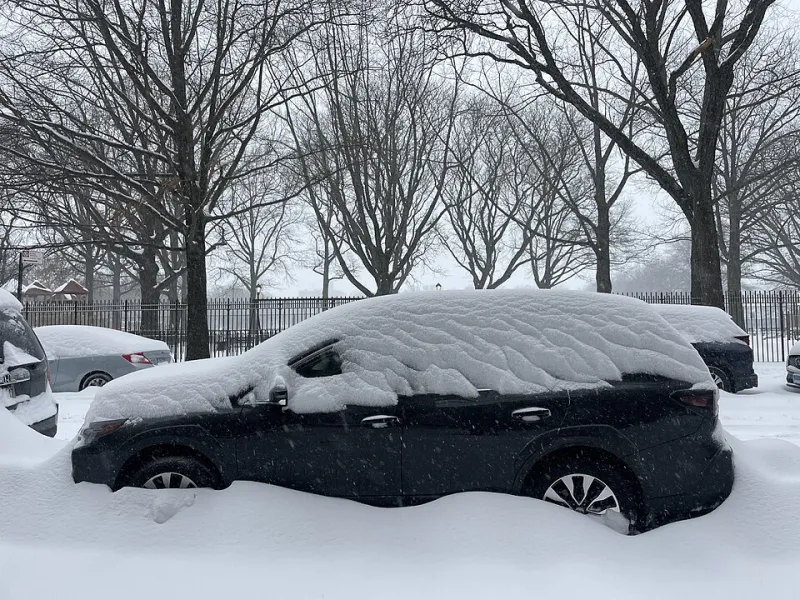
Photo: Wil540 art, CC BY 4.0, via Wikimedia Commons
In Connecticut, winter does not arrive so much as it interrupts. A squall line crosses Fairfield County, the temperature drops six degrees in an hour, and half the state is suddenly searching for someone who can thaw a frozen pipe, tarp a leaking roof, or get the heat back on before the kids come home.
That demand spike is real, and it is short. Most local service companies miss it — not because they lack trucks or technicians, but because their marketing still runs on a Monday-morning newsletter schedule that has nothing to do with the sky.
The fix is not a bigger ad budget. It is a trigger system: alerts, segments, and pre-written pages staged long before the first nor'easter. Here is how Connecticut plumbers, electricians, roofers, and property managers can build one.
The storm is the worst possible moment to start marketing
Think about what actually happens when the snow starts. Your office manager is fielding forty calls. Your best tech is already on the road. Nobody has time to write an email, and if you do post something, it reads like an ambulance chaser: 'We're here for you!' three hours after a tree took out a neighborhood.
The businesses that win these events do the thinking in October. They know which towns they serve, which customers have older systems, and which message they will send the moment the forecast shifts from 'chance' to 'likely.'
Step one: pick your triggers and your towns
You do not need a data science team. You need two inputs.
- A weather source per town. The National Weather Service publishes alerts by county and zone, and most weather APIs let you filter by ZIP. Pick the exact towns you serve — not 'Connecticut.' A Norwalk roofer and a Willimantic roofer have different storms.
- A threshold. Decide now what counts as an event. Ice storm warning? Six inches or more? Wind gusts over 45 mph, which in Connecticut means outages in every neighborhood with mature maples?
Write it down. Define three levels — watch, warning, aftermath — and decide which of your services wakes up at which level. A plumber cares about a hard freeze; a roofer cares about wind and ice dams; a property manager cares about everything.
Step two: segment your list before you need to
Most local businesses keep one list. That is the problem. By the time you remember who lives in Waterbury, the event is over.
Build three or four segments while things are quiet:
- By town or radius, so you can speak only to affected areas.
- By customer type: residential versus commercial, homeowner versus landlord, single-family versus multi-unit.
- By service history: who has called before, who has aging equipment you installed.
- By consent status. This one is not optional. Text messaging in the US requires prior express written consent, and TCPA rules apply whether you are a two-truck shop or a regional HVAC company. Quiet hours, clear opt-out language, honest sender identification — get the template right once and reuse it all winter.
Step three: write the pages in advance
This is where most companies leave money on the table. You can spin up a landing page in twenty minutes on a storm day, but it will be thin, slow, and invisible in search for weeks. If you push paid traffic to it, you are paying full price for a page nobody has optimized.
Instead, publish evergreen storm pages now — frozen pipe repair, ice dam removal, storm damage tarping — with real content: what to do in the first hour, how to shut off the main, what a service call costs, and which towns you cover. Make sure the page loads fast on a phone, because the person reading it is standing in a basement with water rising.
Then, when the alert fires, add a short, dated note at the top: '3 February, 7 a.m. — crews staged in Danbury and Waterbury; same-day calls available.' Fresh, honest, and indexable.
Step four: the message has to sound like a neighbor
The line between helpful and opportunistic is thin, and customers hear it instantly. Two things separate the two.
- Lead with information, not the offer. 'If your pipes run along an exterior wall, open the cabinet doors and let a trickle run overnight' is a message people forward to their neighbors. 'Book now — winter is here!' is the one they mute.
- Name the towns and admit the limits. 'We're covering New Haven and Hamden today; Milford calls roll to tomorrow.' Specificity builds trust faster than a discount code.
Send at the right moment: a pre-storm note 24 to 36 hours out, a short operational update once the event starts, and a wrap-up after the roads clear. Three messages, not ten.
Step five: the follow-up nobody sends
The week after a storm is worth more than the storm itself. A Google Business Profile post, a short recap email, and a check-in to everyone who called but went unserved — 'we couldn't reach you Tuesday, can we get you on the schedule for Thursday?' — turns a chaotic week into a tidy month of booked work.
What to measure
Track the boring numbers: cost per booked job by town, speed of first response, and how many storm-page visitors actually converted. After two winters you will know exactly which towns answer, which channels ring the phone, and which service lines are worth waking up at 4 a.m. for.
Winter in Connecticut will keep interrupting. Build the trigger system now, and the interruptions start paying for themselves.